Mu rated most links between acoustics and health as low or very low in certainty
Iron in subway air peaked at 66 times its level outdoors in the studies that the urban researcher Jing Liu and colleagues reviewed in 2026. Two further reviews from that year cover the sound around people who are sensitive to it and the ventilation of classrooms.
Written by
Christian Huser
neuecon partners
I think the grade of the evidence belongs next to the figure it qualifies.
Three of the seven reviews concern air, sound and temperature, which the design of a building sets
Three of the seven systematic reviews I analysed in July 2026 for a report for The Built Review concern the air, the sound and the temperature inside buildings. The design of a building sets these conditions, and its owner controls them.
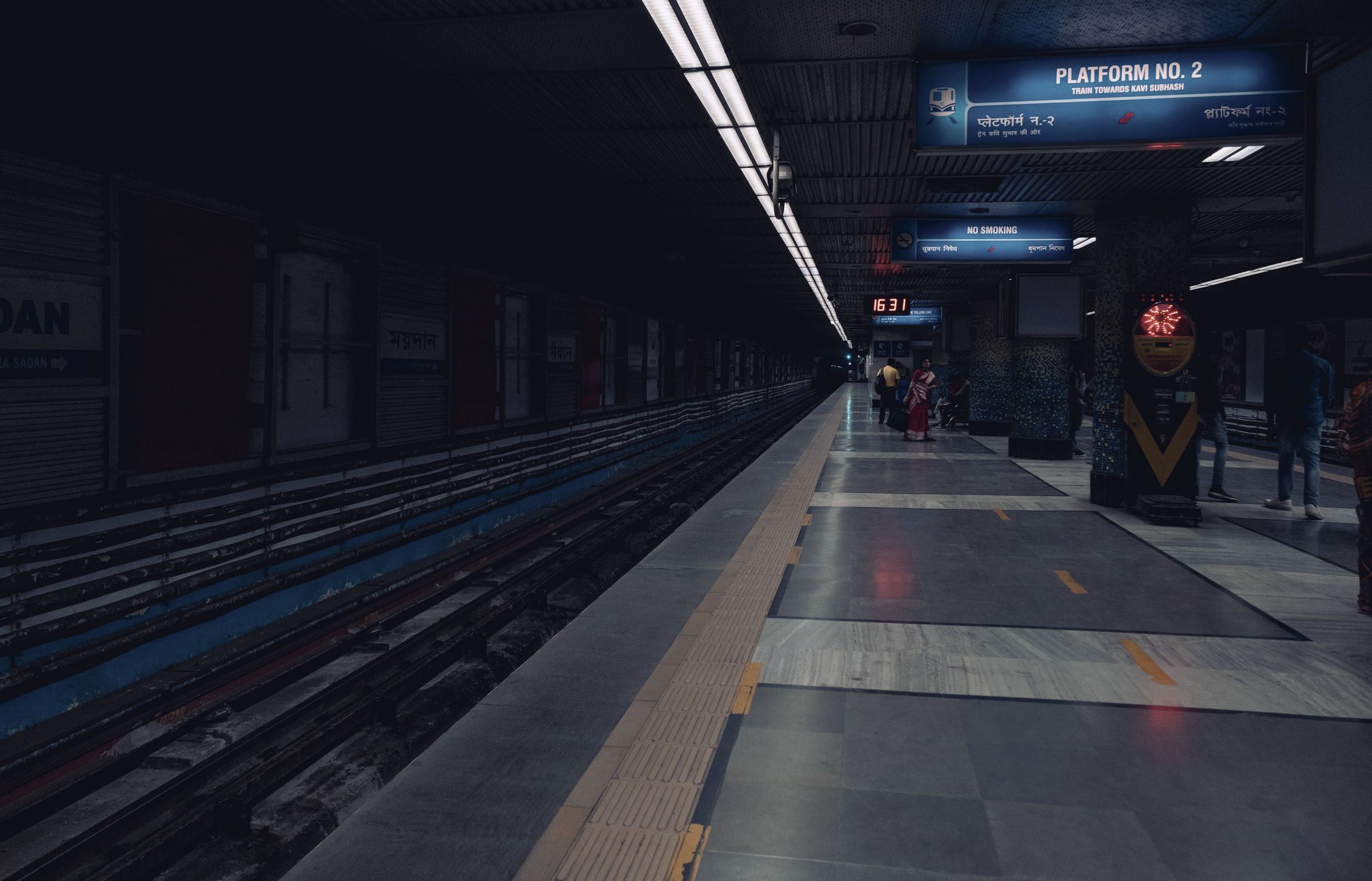
The design of a subway station fixes three of the six features that affect its particle levels
The urban researcher Jing Liu and colleagues reviewed studies of coarse and fine particles in subways in 2026. Concentrations ran highest in the tunnels, followed by the platforms and the ride. In offices inside stations, coarse particles peaked at 405 micrograms per cubic metre of air and fine particles at 212 micrograms per cubic metre. The dust also differs in kind from city air: Liu and colleagues report a maximum for iron of 66 times its outdoor level.
Liu and colleagues name six features that affect the particle levels in a subway: the depth of the station, doors between platform and track, the frequency of trains, the ventilation, the season and the outdoor pollution. The design of a station fixes the depth, the doors and the ventilation.
Poor acoustics went with worse health in all four sensory-vulnerable groups, mostly at low or very low certainty
The architecture researcher Jingyi Mu and colleagues reviewed 180 studies in 2026 on four groups they call sensory-vulnerable: older adults, children, people with hearing loss and hospital patients. In each group, poor acoustics went with worse health, weaker cognition and lower mood. In children, the link concerned mainly cognition and learning.
Mu and colleagues write that the findings may hold useful implications for the acoustic design of schools, hospitals and nursing homes. They also graded how far each result can be trusted, using the GRADE approach, and put most results at low or very low certainty.
Carbon dioxide levels varied widely between classrooms
In 2026, the occupational health researcher Fatemeh Paridokht and colleagues reviewed 42 studies of thermal comfort and ventilation in schools, published from 2020 to 2024. Carbon dioxide levels varied widely between classrooms. Demand-controlled ventilation adjusts the flow of air to the number of people in the room, and Paridokht and colleagues write that it "has shown promise in improving indoor air quality and reducing pollutant levels".
The grade is part of the finding
Liu's peak of 405 micrograms per cubic metre in a station office and the range of carbon dioxide between classrooms come from rooms where exposure is high and people cannot easily leave. I think the grade of the evidence belongs next to the figure it qualifies. Mu and colleagues give that grade for sound. I found no such rating for the air in subways or in classrooms.
Sources
- Liu and colleagues 2026, "Particulate matter across subway microenvironments worldwide: A systematic review and quantitative health-risk assessment", Journal of Hazardous Materials. https://doi.org/10.1016/j.jhazmat.2026.142311
- Mu, Qin and Wang 2026, "Effects of Acoustic Environments on Well-Being in Sensory-Vulnerable Populations: A Systematic Review", Journal of Multidisciplinary Healthcare. https://doi.org/10.2147/jmdh.s589528
- Paridokht and colleagues 2026, "Investigating Thermal Comfort and Ventilation in Schools: A Systematic Review", Journal of Health and Safety at Work. https://doi.org/10.18502/jhsw.v15i3.21421
- The Built Review, "How much of nature's benefit is really the nature?", trend report Q3 2026, July 2026. https://thebuiltreview.com/trend/q3-2026