Why we founded a photography exhibition
Two consultants, a photographer and a former Norwegian minister founded Concrete Human in 2026. Markus Hölzl and Christian Huser explain why they chose photographs for a subject they usually put in front of clients as requirements.
Written by
Christian Huser
neuecon partners
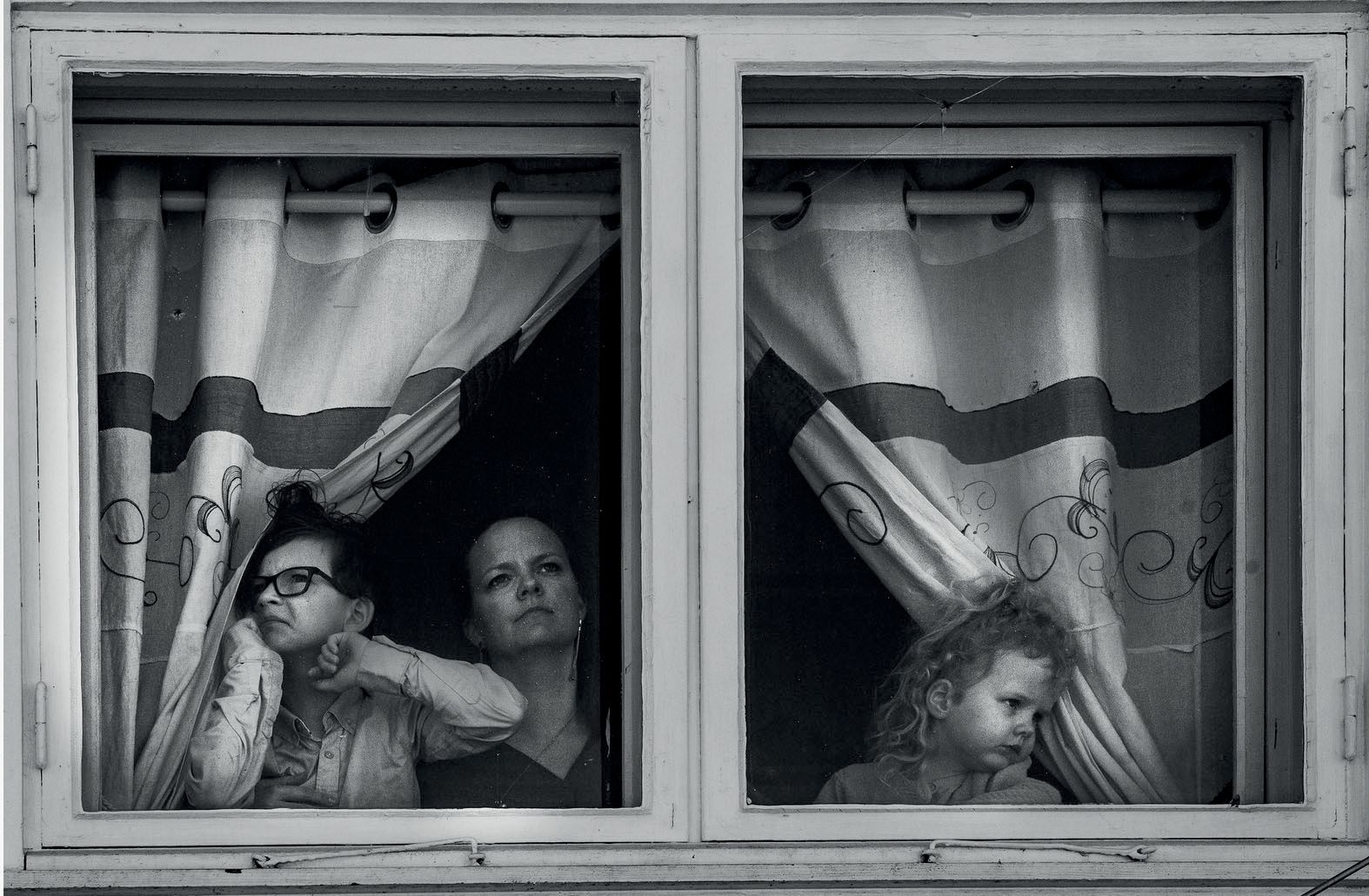
Concrete Human is a photography exhibition on the built environment and human health. Four people founded it in 2026: the two of us at neuecon partners, the architect Markus Hölzl and Christian Huser, the Norwegian photographer André Clemetsen and Ola Elvestuen, Norway's former Minister of Climate and Environment. The two organisations behind it are neuecon partners and the online publication The Built Review. The first series is online, and a call for the next one is open.
The exhibition exists because of a gap we meet in our consulting work. Neuroscientists and environmental psychologists have spent decades measuring what a building does to the people inside it, to their sleep, their concentration and their recovery. Their results are published. Hardly anyone who commissions a building has read them, and almost nobody who will live or work in it.
What a finding looks like on paper
A result from a study arrives as a figure with a unit and a condition. To read it well, a person needs the size of the sample and the range around the number. Most people who live in buildings have never had a reason to learn that.
We use these results every working day. At neuecon partners we select from more than 15,000 studies the findings that matter for a building, in the first two of eight project phases, before the design begins. Our clients receive them as requirements a building has to meet. That form suits an owner or a company with a project in front of them.
A tenant in a dense district or a parent choosing a flat will not open a journal of environmental psychology. We believe the subject concerns them as much as it concerns an investor, and that the same evidence has to be put in front of them in another form.
Why we chose photography
A photograph needs no unit. A visitor stands in front of it and recognises a staircase or a street they know, and with it the feeling of such a place. That recognition happens before anyone has read a caption. We believe this is why the subject has to be shown as well as measured, and photography is the medium we chose for showing it.
The first series, Adjacent Solitude, is about people who live among others and are lonely all the same. Some of the photographs are documentary and some are closer to abstraction. Short interviews, quotations and fragments of text hang beside them. Every print is labelled with the photographer, its title and the series it belongs to.
No print is labelled with a study. We do not place a single photograph next to a single research finding, and we do not caption an image with the effect it is supposed to demonstrate. The photographs are shown as works. The research is on its own page of the website, sorted by theme, where a visitor can read each finding with its range and the study it comes from.
What the exhibition is meant to become
The exhibition began with one series. It is built as a long-term platform on architecture, urban development and human health, with a knowledge section that we extend alongside the photography. A call for professional photographers is open now, on the current themes and without a fee.
For us the consulting and the exhibition are one subject seen from two sides. In a building project we set the requirements early and check them later, and the client pays for that work. In the exhibition we show the same evidence to people who will never commission a building and who live with the result of one for decades. We would like them to see it before a plan is approved, because the building that follows stands for thirty years or more.
The series, the call and the research page are at concretehuman.com.