Measures without building work improved how intensive care patients rated their sleep
Eye masks and a white-noise app made intensive care patients rate their sleep better, and neither needs building work. In pooled trials of dark nights, the instruments that measured sleep found no gain.
Written by
Christian Huser
neuecon partners
Patients reported better sleep even where the instruments showed none.
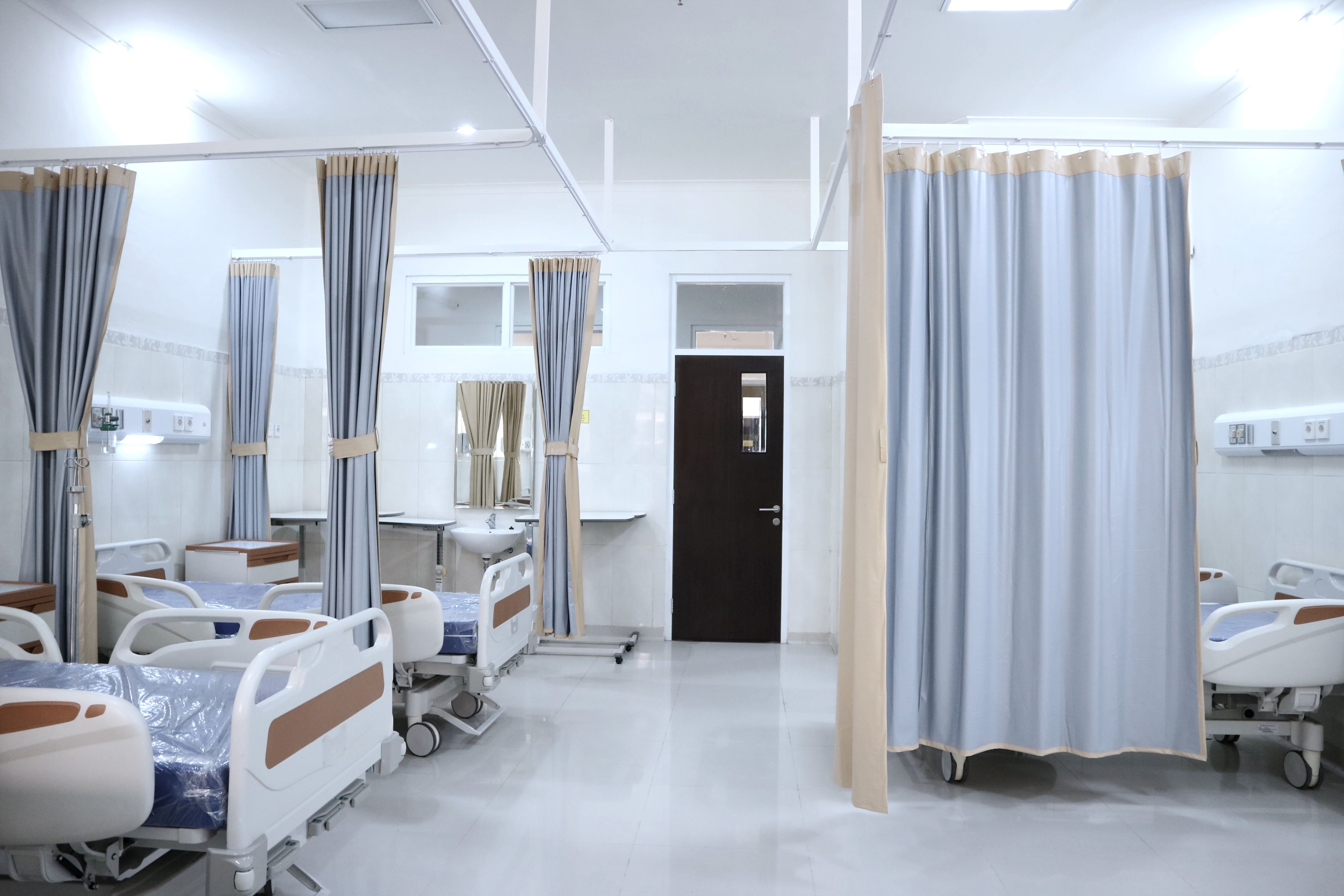
Intensive care units run far above the WHO night guidance
In June 2026, I analysed 25 studies on sleep and the indoor environment for a report for The Built Review on hospitals. Only on noise and light was the evidence thick enough to rank; on air, humidity and temperature it was too thin to decide on.
A typical intensive care unit in the UK was 10 to 20 dB louder than the night guidance of the World Health Organization, which the ear hears as several times louder. The critical care researcher Julie Darbyshire and the intensive care physician Duncan Young recorded this in 2013. Their sound level never fell below 45 dBA, decibels weighted to human hearing, and for half of the recording time it lay between 52 and 59 dBA. The WHO guidance they cite is roughly 35 dB on average and 40 dB at most.
Louder nights went with less efficient sleep
At home, louder nights went with a smaller share of the time in bed spent asleep, which sleep researchers call sleep efficiency. The sleep researcher Mathias Basner and colleagues found this in 2023, and the epidemiologist Yinxian Chen and colleagues in 2026. In Basner's study, sleep efficiency was 4.7% lower in the loudest fifth of noise exposure than in the quietest fifth, a gap that chance can hardly explain (p below 0.0001).
Intensive care noise also disturbed the sleep of healthy volunteers. When the intensive-care researcher Sandra Horsten and colleagues pooled controlled studies in 2017, the volunteers under that noise had more arousals, short shifts from deeper to lighter sleep, than at baseline. The results of the pooled studies differed widely.
Changes that need no builders
Staff can lower the noise of a unit themselves. On two intensive care units in Singapore, the anaesthesiologist Bernard Ong and colleagues ran talks, posters and self-audits led by the unit nurses, and compared the units with a control hospital. In 2025, they reported that the average sound level fell by 4.8 dB, a fall too large to put down to chance (p=0.009).
Other measures cover the noise or the light at the bed. In 2021, the nursing researcher Evansaralin Warjri and colleagues gave critically ill patients a white-noise app, which plays a steady sound through earphones. On each of three days, these patients rated their sleep better than a control group.
Patients reported better sleep even where the instruments showed none. The nursing researcher Karina da Silva Higa and colleagues pooled trials in 2022 that kept intensive care nights dark with less light, eye masks or glasses that block blue light. With eye masks, patients scored their sleep 10 points higher on a 100-point scale than on the usual routine, with a 95% confidence interval, the range the data do not rule out, of 7.97 to 12.03. The reviewers rated their certainty in this result as moderate, and sleep measured by instruments did not improve.
On a quieter ward, the gap was the same. The neurologist Katherine Thomas and colleagues tested sleep rounds, a set of measures to help patients sleep, on a neurological ward whose night level was already 35 to 40 dB, and published the study in 2012. The rounds lowered neither the measured noise nor the measured sleep disruption, yet the patients rated their sleep experience better in the phases with the rounds.
Light lengthened sleep in dementia and depression
In two trials, light that was bright by day and dim at night lengthened sleep. In 2023, the lighting researcher Mariana Figueiro and colleagues gave such lighting to people with moderate to severe dementia in assisted living and memory care, who then slept longer (p=0.018) and fell asleep earlier (p=0.012).
The architect Carlo Volf and colleagues randomly assigned inpatients with major depression in 2025 to dynamic LED light, which changed its brightness over the day, or to static LED light. In melanopic lux, a measure of light by its effect on the body clock, the dynamic light peaked at 576 by day and the static light stayed at 66. The patients under the dynamic light slept longer (p=0.02) and woke less often, and their sleep ended later.
A third dementia trial split ratings from measurement again. In 2021, the public health researcher Gunnhild Hjetland and colleagues gave bright light to nursing-home patients with dementia. By week 16 and week 24, the people who rated the patients' sleep on their behalf reported better sleep, but the wrist sensors, which read sleep from movement, showed no effect.
Office studies point both ways
Daylight lengthened sleep in one office study. In 2020, the architecture researcher Mohamed Boubekri and colleagues compared an office that let in more daylight, at 316 equivalent melanopic lux, with a condition at 40.6. The workers slept 37 minutes longer in the daylit condition, measured with wrist sensors, and those who had slept least at the start gained the most.
Two office studies of tunable light, electric light whose brightness and colour change during the day, found no gain in sleep. The same year as Boubekri, the lighting researcher Rongpeng Zhang and colleagues ran a dynamic lighting schedule for office occupants, who afterwards rated their sleep worse and reported sleeping for a shorter time. In 2023, the lighting researcher Jessica Collier and colleagues compared static and dynamic light in office workers and found no significant difference on any sleep measure.
What the studies leave open
I found no study among the 25 that established that better sleep in hospital leads to faster recovery or a shorter stay, and no cost for a quieter ward or a lighting system. Without costs, I cannot weigh walls, doors and layouts that keep sound out of patient rooms against a lighting system. Most of the evidence on light came from offices and homes, and the lighting trials in patients took place in dementia care and on a psychiatric ward.
Quiet first, then light
A hospital that wants its patients to sleep can start with noise, because the measures tested on intensive care units, the loudest wards, need no building work. Their weakness is that most of the gains are patients' own ratings, which the instruments did not confirm where they measured sleep.
Light has a narrower base in patients. Tunable light gave healthy office workers no better sleep, and none of the studies tested bright days and dim nights on a general ward, so I would not specify tunable light there as a sleep measure. Units for dementia and depression are where I would specify light that is bright by day and dim at night, because Figueiro and Volf found longer sleep under it there.
Sources
- Darbyshire and Young 2013, "An investigation of sound levels on intensive care units with reference to the WHO guidelines", Critical Care 17(5):R187. https://doi.org/10.1186/cc12870
- Basner and colleagues 2023, "Associations of bedroom PM2.5, CO2, temperature, humidity, and noise with sleep: An observational actigraphy study", Sleep Health 9(3):253-263. https://doi.org/10.1016/j.sleh.2023.02.010
- Chen and colleagues 2026, "Day-by-day changes in the indoor environment and sleep health among African American adults", Sleep Health 12(3):425-432. https://doi.org/10.1016/j.sleh.2026.03.008
- Horsten and colleagues 2017, "Systematic review of the effects of intensive-care-unit noise on sleep of healthy subjects and the critically ill", British Journal of Anaesthesia 120(3):443-452. https://doi.org/10.1016/j.bja.2017.09.006
- Ong and colleagues 2025, "Effectiveness of a noise reduction intervention in the intensive care unit: A prospective bicenter study", World Journal of Critical Care Medicine 14(4):106359. https://doi.org/10.5492/wjccm.v14.i4.106359
- Warjri and colleagues 2021, "Impact of a white noise app on sleep quality among critically ill patients", Nursing in Critical Care 27(6):815-823. https://doi.org/10.1111/nicc.12742
- da Silva Higa and colleagues 2022, "Dark nighttime interventions and sleep quality in intensive care unit patients: A systematic review and meta-analysis", Nursing in Critical Care 29(1):144-155. https://doi.org/10.1111/nicc.12827
- Thomas and colleagues 2012, "Sleep rounds: A multidisciplinary approach to optimize sleep quality and satisfaction in hospitalized patients", Journal of Hospital Medicine 7(6):508-512. https://doi.org/10.1002/jhm.1934
- Figueiro and colleagues 2023, "Tailored lighting intervention (TLI) for improving sleep-wake cycles in older adults living with dementia", Frontiers in Physiology 14:1290678. https://doi.org/10.3389/fphys.2023.1290678
- Volf and colleagues 2025, "Dynamic versus static LED-lighting for inpatients with major depression: Long-term antidepressant effects and short-term sleep improvement in a randomized controlled clinical trial", Chronobiology International 42(9):1122-1136. https://doi.org/10.1080/07420528.2025.2530129
- Hjetland and colleagues 2021, "Ambient bright light treatment improved proxy-rated sleep but not sleep measured by actigraphy in nursing home patients with dementia: a placebo-controlled randomised trial", BMC Geriatrics 21:312. https://doi.org/10.1186/s12877-021-02236-4
- Boubekri and colleagues 2020, "The Impact of Optimized Daylight and Views on the Sleep Duration and Cognitive Performance of Office Workers", International Journal of Environmental Research and Public Health 17(9):3219. https://doi.org/10.3390/ijerph17093219
- Zhang and colleagues 2020, "Impacts of Dynamic LED Lighting on the Well-Being and Experience of Office Occupants", International Journal of Environmental Research and Public Health 17(19):7217. https://doi.org/10.3390/ijerph17197217
- Collier and colleagues 2023, "Studying Response to Light in Offices: A Literature Review and Pilot Study", Buildings 13(2):471. https://doi.org/10.3390/buildings13020471
- The Built Review, "Hospital noise, still above the WHO floor", report, June 2026. https://thebuiltreview.com/reports/built-to-wake